
Picking sellers and items before they reach an Oopbuy door
The door decides the rules. The seller and the listing decide whether you will need them. Checks to run before you pay.
How to choose a seller you can chase
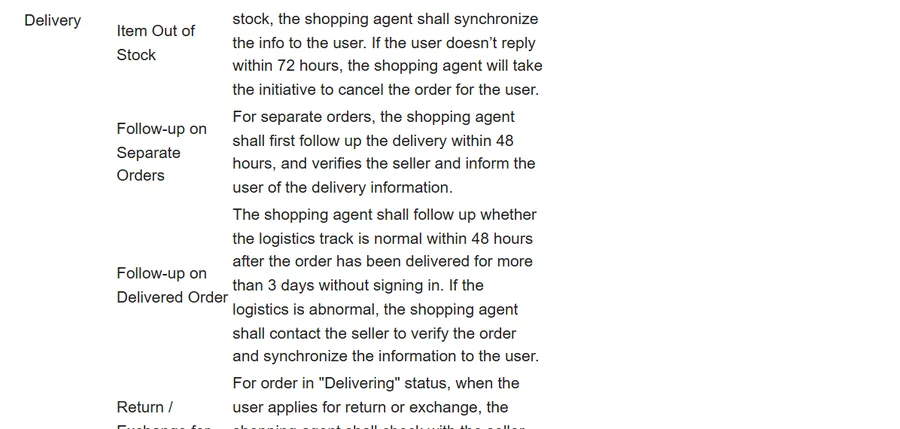
On Door 1 the seller is a third party, and Oopbuy's agent can only chase them. The Purchasing Instructions describe the chase: follow-up on day 4 if nothing has shipped, again every 3-4 days, and a suggestion to cancel if the seller never replies. Out-of-stock notices go to you, and silence for 72 hours means cancellation.
- Pick sellers who state guaranteed returns. The 5-day window only exists when the seller offers it.
- Prefer a listing with a size chart and real photos over one built from a single model shot.
- Look for shipping-time promises on the listing. Pre-sale and deposit orders are excluded from the follow-up schedule.
- On 1688, check minimum order quantities. Wholesale listings often price per batch, not per piece.
On Door 2 there is less to go on: a Xianyu seller is often a private person, and a Yupoo album is a photo gallery, not a shop with ratings. Message the agent with exactly what to confirm before buying.
Three seller signals are worth more than a high sales count. A seller who answers the agent's pre-purchase question quickly will usually answer a return request quickly too. A listing whose photos show the item on a plain table, with labels visible, tends to match what arrives. And a seller who states a shipping time on the listing gives the agent something to hold them to when the follow-up starts on day 4.
How to choose an item that survives the trip
Most disappointments are visible on the listing before you pay. Five checks cover nearly all of them: size chart in centimetres, the exact option text, material and weight, shipping restrictions, and return eligibility.
Weight deserves a second look because it drives the second bill. A heavy coat can cost more to ship than to buy. If the listing gives no weight, ask the agent to weigh it when it arrives, and use the estimator before committing to a route.
Return eligibility is the last check because it is the one people learn too late: underwear, socks, leggings, custom-made items and opened sealed products (fragrance, cosmetics, sealed electronics consumables) are excluded from the 5-day guarantee.
Things to check before you pay
A short list of the mistakes that cost the most, drawn from Oopbuy's own rules:
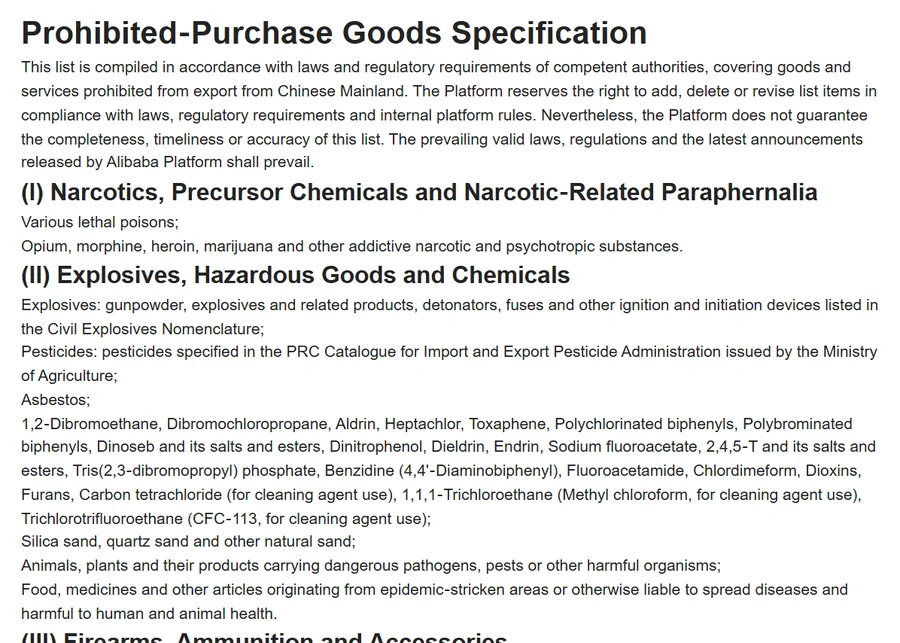
- Ordering a prohibited item. Knives, lighters, seeds, magnetic parts and more are refused for shipment. Medicines, liquids, pastes and powders need a question to support first.
- Assuming a return. For a standard agent order, check seller eligibility and the applicable request window. For DIY or Mall goods, obtain the specific terms before paying; a gap in our public-page research does not prove there is no return right.
- Letting the clock run. 120 hours for a return request, 90 days of free storage, 7 days after delivery for a damage claim.
- Paying the deposit price. On DIY orders the under-10-CNY entry is followed by a top-up for the real price.
- Under-declaring. Oopbuy's examples of unreasonable declarations are not hypothetical warnings; customs risk and fines are yours.
The full prohibited list runs to twelve sections, from narcotics to supplements. Skim the headings once.
Declaring the parcel without trouble
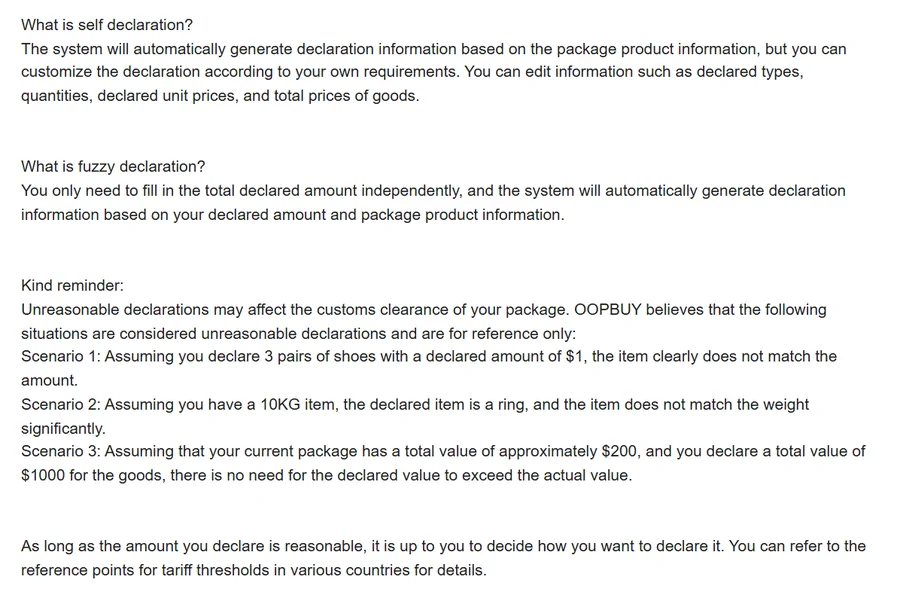
Declaration happens at the end, when you submit the parcel, but it depends on choices you make at the start. Self declaration fills in item types, quantities and unit prices from your orders; fuzzy declaration asks only for a total value.
Oopbuy lists three declarations it considers unreasonable: three pairs of shoes declared at $1, a 10 kg item declared as a ring, and a $200 parcel declared at $1000. Both directions are wrong. A declaration that does not match the contents can delay clearance, and duties and fines are charged to you.
If you mix doors in one parcel, the declaration covers everything inside. Keep your order values handy, including Mall item prices, before you submit.
Customs thresholds differ by destination, and Oopbuy's own FAQ keeps a reference table: the United Kingdom and the EU are listed at 0, so VAT applies to all imports there. Read the current rules for your country rather than relying on a table that may be older than the latest change.